Specifications
Surface Treatments
Certifications
- ISO 9001 - 2015 Certified
- PED 2014/68/EC
- NACE MR0175/ISO 15156-2
- NORSOK M-650
- DFAR
- MERKBLATT AD 2000 W2/W7/W10

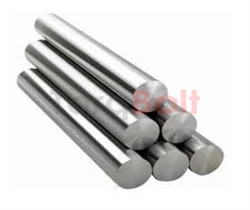
Hiduron 130 (UNS C72400), Hiduron 191 (UNS C72420) and C72200 sit in adjacent UNS numbers within the cupronickel family but carry different strengthening mechanisms and different service envelopes. C72200 is a chromium-modified copper-nickel alloy (16Cu-Ni-Cr) developed primarily for marine heat-exchanger tube and piping service where the chromium addition lifts the chloride-pitting resistance above plain 70/30 cupronickel. Hiduron 130 and 191 are aluminium-strengthened Cu-Ni-Al alloys with the gamma-prime Ni3Al precipitation-hardening mechanism that delivers the structural-strength envelope acceptable for bolting and machined components.
| Property | Hiduron 130 (C72400) | Hiduron 191 (C72420) | C72200 |
|---|---|---|---|
| Family | Cu-Ni-Al precip-hardened | Cu-Ni-Mn-Al precip-hardened | Cu-Ni-Cr modified |
| Strengthening | Gamma-prime Ni3Al | Gamma-prime Ni3Al + Mn solid solution | Solid solution + cold work |
| Tensile (Rm) | 740 to 850 MPa | 820 to 1000 MPa | 340 to 480 MPa (annealed to H10) |
| 0.2 percent proof | >=480 MPa | >=580 MPa | 140 to 380 MPa |
| Pitting resistance | Excellent (Cu-Ni matrix) | Excellent (Cu-Ni-Mn matrix) | Excellent (Cr addition) |
| Primary form | Bolting, machined components | Bolting, machined components | Seamless tube, plate (piping focus) |
| Primary use case | Subsea hydraulic connectors | Naval bolting, splash zone | Marine heat-exchanger tube, condenser |
| Element | Hiduron 130 | Hiduron 191 | C72200 |
|---|---|---|---|
| Cu | balance (~80 to 82) | balance (~76 to 78) | balance (~82 to 84) |
| Ni | 14.0 to 15.5 | 14.0 to 15.5 | 15.0 to 18.0 |
| Al | 2.7 to 3.4 | 1.5 to 2.5 | n/a |
| Cr | n/a | n/a | 0.30 to 0.70 |
| Mn | up to 0.75 | 4.0 to 5.0 | up to 1.0 |
| Fe | 1.0 to 2.0 | 0.5 to 1.5 | 0.50 to 1.0 |
Hiduron 130 and Hiduron 191 are supplied in the bolting and machined-component form range (round bar, stud bolts, hex bolts, heavy hex bolts, anchor bolts, U-bolts, threaded rod, nuts, heavy hex nuts, washers, forgings, machined components) detailed in the shared Forms block below. C72200 is supplied in seamless tube, welded tube, plate, sheet and flat-rolled product from adjacent mill sources for marine heat-exchanger and condenser-tube applications.
Q. Is Hiduron a substitute for C72200?
No. C72200 is a chromium-modified Cu-Ni alloy specified into marine heat-exchanger tube and condenser-tube service where the chromium addition lifts pitting and erosion-corrosion resistance. Hiduron 130 and 191 are aluminium-strengthened Cu-Ni-Al alloys specified into bolting and machined components. The UNS numbers are adjacent but the alloy classes are not interchangeable.
Q. Why does Hiduron carry higher strength than C72200?
Hiduron carries gamma-prime Ni3Al precipitates from the aluminium addition (1.5 to 3.4 percent) that strengthen the matrix on the solution-anneal plus age cycle. C72200 has no aluminium and no precipitation-hardening response; the alloy relies on solid-solution and cold work for strength.
Q. Why does C72200 have chromium?
The 0.30 to 0.70 percent chromium addition in C72200 lifts the chloride-pitting and erosion-corrosion resistance above plain 70/30 cupronickel in higher-velocity seawater service such as condenser tube on commercial marine and naval ships. Hiduron carries the corrosion envelope through the Cu-Ni-Al chemistry without needing chromium.
Q. Are both NACE MR0175 compliant?
Hiduron 191 is qualified to NACE MR0175 at the 286 HBW (28 HRC) hardness ceiling. C72200 in the solid-solution-annealed condition carries low hardness implicitly below the NACE ceiling, but the alloy is not the primary NACE Cu-Ni listing for sour-service bolting because the application envelope is piping and heat-exchanger tube.
Q. Do you supply both alloys?
TorqBolt supplies Hiduron 130 and Hiduron 191 in the bolting and machined-component form range. C72200 tube, pipe and plate are sourced from adjacent mills for project supply when the cross-reference is required. EN 10204 type 3.1 or 3.2 certification on either alloy.