Specifications
Surface Treatments
Certifications
- ISO 9001 - 2015 Certified
- PED 2014/68/EC
- NACE MR0175/ISO 15156-2
- NORSOK M-650
- DFAR
- MERKBLATT AD 2000 W2/W7/W10

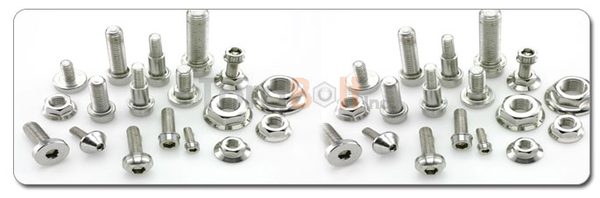
Hiduron 130 (UNS C72400) and Hiduron 191 (UNS C72420) are the two grades in the Hiduron Cu-Ni-Al precipitation-hardened cupronickel family. They share the gamma-prime Ni3Al strengthening mechanism, the seawater corrosion resistance, the non-magnetic response and the anti-galling characteristic, but they differ in chemistry rank order, strength envelope, toughness envelope, NACE qualification path and procurement traceability chain. Hiduron 130 is the base mid-strength grade with higher aluminium (2.7 to 3.4 percent) and higher elongation; Hiduron 191 is the manganese-modified higher-strength grade (4 to 5 percent manganese, 1.5 to 2.5 percent aluminium) qualified for NACE MR0175 sour service. The decision between them is the strength versus toughness trade-off at the project requirements stage.
| Property | Hiduron 130 (C72400) | Hiduron 191 (C72420) |
|---|---|---|
| Werkstoff | 2.1504 | not formally assigned |
| Chemical-symbol designation | CuNi14Al3Fe1 | CuNi14Mn4AlFe |
| Primary procurement standard | DTD 900/4805 (UK Air Ministry) | NES 835, DEF STAN 02-835, DOD-C-24676 |
| Tensile (Rm) | 740 to 850 MPa | 820 to 1000 MPa |
| 0.2 percent proof (Rp0.2) | >=480 MPa | >=580 MPa |
| Elongation A5 | >=18 percent | >=15 percent |
| Charpy V at RT | >=60 J | >=40 J |
| Hardness (HV) | 240 to 280 | 270 to 320 |
| NACE MR0175 qualification | Not the primary NACE listing | Qualified at 286 HBW (28 HRC) ceiling |
| Magnetic permeability | <1.005 mu_r | <1.005 mu_r |
| Density | 8.85 g/cm3 | 8.65 g/cm3 |
| Flagship use case | Subsea hydraulic connectors | Naval bolting, splash zone, sour service |
| Element | Hiduron 130 typical | Hiduron 191 typical | Role of difference |
|---|---|---|---|
| Cu | balance (~80 to 82) | balance (~76 to 78) | Lower Cu in 191 to accommodate Mn |
| Ni | 14.0 to 15.5 | 14.0 to 15.5 | Equal in both grades |
| Al | 2.7 to 3.4 | 1.5 to 2.5 | Higher in 130 for higher elongation |
| Mn | up to 0.75 | 4.0 to 5.0 | Solid-solution strengthening unique to 191 |
| Fe | 1.0 to 2.0 | 0.5 to 1.5 | Slightly higher in 130 for grain refinement |
Both Hiduron 130 and Hiduron 191 are supplied in the bolting and machined-component form range detailed in the shared Forms block below. The form list is identical for the two grades; the procurement decision lands on the chemistry and the mechanical envelope, not the form availability. Round bar is the primary stock for both; finished bolting and machined components are produced from solution-annealed bar and age-treated in the finished condition.
Q. What is the difference between Hiduron 130 and Hiduron 191?
Hiduron 130 (UNS C72400) is the base mid-strength Cu-Ni-Al grade specified into subsea hydraulic connectors and marine machined components to DTD 900/4805. Hiduron 191 (UNS C72420) is the manganese-modified higher-strength grade specified into naval bolting and splash-zone offshore bolting to NES 835, DEF STAN 02-835 and DOD-C-24676. Hiduron 191 is the grade qualified for NACE MR0175 sour service.
Q. Which grade is NACE MR0175 compliant?
Hiduron 191. The grade is qualified to NACE MR0175 at the 286 HBW (28 HRC) maximum hardness ceiling on the standard solution-anneal plus age cycle. Hiduron 130 is not the primary NACE listing in the family; for sour-service applications the design steps up to Hiduron 191.
Q. Which has higher elongation?
Hiduron 130. The base Cu-Ni-Al chemistry without the manganese addition holds elongation A5 above 18 percent and Charpy V impact above 60 J at room temperature. Hiduron 191 with the manganese addition runs higher strength but lower elongation (A5 above 15 percent) and lower Charpy V (above 40 J).
Q. Both are non-magnetic; same naval qualification?
Both grades hold magnetic permeability below 1.005 mu_r by alloy class. For naval mine-countermeasures applications either grade is qualified by magnetic response; the selection between them lands on the strength envelope and the NACE compliance path, not the magnetic property.
Q. Can a single project use both grades?
Yes. Cross-reference projects often specify Hiduron 130 for the subsea connector body (DTD 900/4805 traceability, higher elongation for machining) and Hiduron 191 for the bolting that ties the connector to the structural mating part (NES 835 traceability, NACE compliance, higher strength). EN 10204 type 3.1 or 3.2 on either grade.